Posts

The Sauvage Family

Image
Presenting the characters at the heart of the HAUNTIBLES storyline: the Sauvage Family. For generations, these gardeners have expertly tended a prestigious Conservatory and Botanical Gardens. Now evil is about to descend on their quiet botanical paradise, and they must draw upon an ancient family secret to survive. First up is Kathryn Sauvage, a skilled gardener who lovingly raises both plants and a daughter. She has endless reserves of patience, kindness, and a quick wit that guides the family through numerous storms. Kathryn also tends to worry, and lately, her daughter's strange behavior has given her reason. Felix Sauvage believes in hard work, careful planning, and keeping a tight schedule. He has little time for flights of fantasy and wishes his daughter would get her head out of the clouds. This stern countenance disguises a tender heart, however, and despite his seemingly gruff exterior, he's been known to crack a smile from time to time. ...

The (new) Official Launch Trailer!

Image
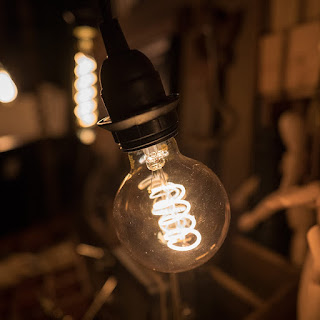
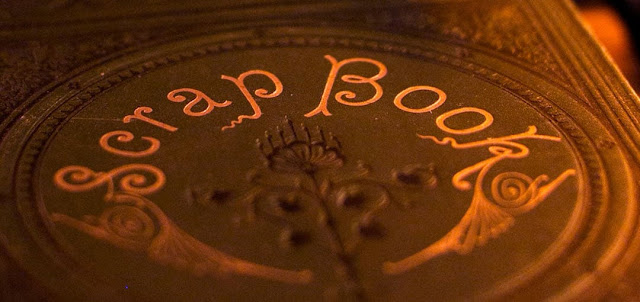
A new Hauntibles trailer has launched! This short film took a long while to make as it involved sourcing and dressing the set with antiques, lighting them to simulate the glow of vintage Edison bulbs, using my home-made dolly to get smooth shots, and then editing the footage down to roughly a minute. Phew! I'm very happy with how it turned out, and feel it better reflects the vintage mood of the game. Thanks to @papersofthepast for lending me the scrapbooks and @orchestralis for their perfectly ethereal music.

A Million Different Ways...

Image
A haunting tale...told a million different ways. What does that mean? A million different ways? Well, that's what makes the story in HAUNTIBLES so unique. Everyone who plays the game will piece together a different scrapbook, one drawn from a curated archive of scraps that I've assembled. The amount of variety is staggering. There are literally millions of combinations. So, the scrapbook you see will be unlike anyone else's. Don't worry about missing out, though. Everyone will still get certain scraps to make sure major plot points come across. But there may be clues and insights hidden in scraps that you, and only you find!

Lights, Camera, Action!

Image
Trailers are probably the most important way indie developers can introduce their games. They're extremely vital, which is why I came out with one so early. But looking back, I think the messaging in this first video wasn't as clear as it could have been. Good trailers highlight, they don't summarize. They show you why the game is fun and worthy of your time. My first trailer focused too much on the game's origins, and not enough on what makes the game interesting. I also think it relied too heavily on motion graphics, which went against the real-world vintage textures found in the game. So, I'm filming another trailer. This one requires a lot more production, and I've spent the last few days assembling a collection of spooky props. These objects were sourced them from my neighbor's basement, Target, Ikea, and a few I've picked up at rummage sales. Props in the trailer relate to various elements of the game, highlighting all the coolest featur...

Balancing Act

Image
Creating a game means balancing a great deal of things simultaneously. Focus on one aspect too much, and the whole project risks falling apart. Here's a list of things I'm always trying to balance: Development of the game itself vs marketing it on social media and blogs. Polishing the story vs polishing the gameplay. Spending time at the computer vs exercising and getting outside.  Purchasing assets vs keeping the costs down. Making the game polished vs actually finishing it! And that's just an abbreviated list. There are lots more balancing acts to consider. For me, the secret to achieving a good balance is learning to prioritize and knowing when something is "good enough". There's the old saying that projects are never finished, they're simply abandoned. While I think that's a little harsh, there is some truth to that. The good thing about modern games is they are very easy to update. That doesn't mean I want to release an unfinishe...

Medium Mechanics

Image
With the rise of spiritualism in the late 19th century, mediums became quite popular. These psychic individuals claimed to have a special connection with the "other side" and performed seances to exhibit their paranormal skills. Many of the game mechanics in HAUNTIBLES are directly inspired by techniques employed by mediums, as I think they add a spooky layer to the experience. Here's a breakdown of the main parts I borrowed... Ghost Guides - Mediums traditionally connected with the same specter each session, who either possessed them or entered the room as an apparition. These ghostly guides acted as MC's of the spirit world, introducing other poltergeists or just imparting wisdom on their own. There's a ghost in HAUNTIBLES who acts as your guide to the spirit world. She doesn't say anything, choosing instead to communicate through the objects she materializes, known as apports . Apports - the mysterious appearance of objects due to p...

Iteration

Image
Iteration means to go over something again and again, seeing what works, what doesn't, and refining the end product each time. It's time consuming and exhausting, but is a proven method for making your game better. The more I iterate, however, the more numb I get to everything, so I find it's extremely useful to get feedback from others. I might not always agree with their solutions, but more often than not, I find they've honed in on problem areas I hadn't noticed. A key component of iteration is called "playtesting". This involves actually playing your game or letting others do so, and evaluating it for certain core factors such as "fun, challenge, engagement, etc." I've probably iterated HAUNTIBLES hundreds of times by now. I feel like Bill Murray in Groundhog Day. But the game is getting better each time. Trick now is knowing when it's good enough, for I feel if one's not careful...you could iterate forever. Ma...

Mile 20

Image
Developing a complex project like a video game is similar to running a marathon. (I know I already compared it to building a house. Metaphors are fun!) It's all about pacing yourself. Irregardless of your rhythm and positive outlook, however, there always comes a point when you reach what I call, The Dreaded Mile 20 . At Mile 20 you lack the fresh vigor of the start. The halfway point celebration has come and gone. You're pretty tired, burnt-out, and wonder if you'll ever complete the freaking thing. The finish line isn't visible yet, so it's too soon to exhaust that last sprint to the end...but you feel your energy grinding to a halt. Mile 20 is awful. And it's killed more than one project.  Then you add a certain sound effect, or a little animation, and part of the game comes alive. That little glimpse of what the end result could be is often all it takes. So you carry on...one keystroke at a time...one click of the mouse. Closer, inch by inch. U...

Roaring Twenties

Image
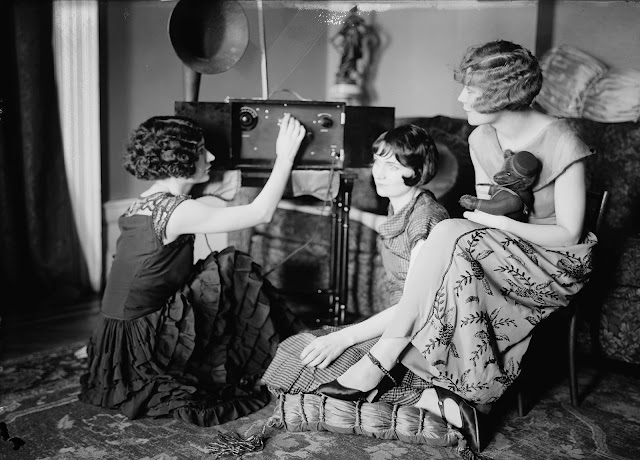
The Bronx Sisters, a popular singing trio of the decade. The storyline for HAUNTIBLES goes back a long way, but the bulk of it takes place in the 1920's. The reason for this is a mixture of practicality and aesthetics. First, the practical side of things. I wanted there to be photographs in HAUNTIBLES , and not just any photos, but the candid ones that we're used to seeing today. These didn't appear until the arrival of Kodak's Brownie Camera in 1900. So the storyline had to happen after that.   Until the advent of Kodak's tiny box camera, photography was strictly in the hands of professionals. Next, I wanted to use real scraps from the era: cut-out ads, bus tickets, gum wrappers, ephemera. In order to avoid hunting down the copyright for every single image, I decided to stick with images in the public domain. Anything published prior to 1924 falls into this category, so that became a good cutoff date for me. I love hats and everyone in the...

Creeeeeeeeeak!

Image
I always knew that audio was going to be an important aspect of HAUNTIBLES. Sound design is really one half of film-making, and in many ways, my favorite half. I have fond memories from film school, crunching celery stalks and stomping around in boots for some home-made foley (which is when you make SFX on the fly while watching the movie play.) That's one of the reasons I wanted to record as many original sound effects as I could for the game, using my trusty Zoom H4N mic. This personal library is being augmented with public domain sounds from freesound.org and a few SFX to which I've purchased the rights. Collecting sounds is only one part, however. Placing them is where the magic happens. Every dial, switch, and action in the game needs a corresponding sound to give it weight and reality. If it's a frequently used switch, however, the sound can't be annoying - a lesson I've learned by testing the game a gazillion times. (Bad sounds gets annoying fast!) ...

Building a House

Image
 A screenshot from the Xcode scene editor, showing the game's map. I've been trying to think of a metaphor for the development process, and a good one just occurred to me the other day; building a game is like building a house. It starts with an architect ( game designer ) who sketches out a plan. These blueprints ( design documents ) get sent along to the various contractors like plumbers, electricians, roofers, etc. ( coders, graphic designers, sound designers, etc. ) who all work under supervision of the project manager ( lead developer ). I'm not an expert on either of these things, so I'm probably getting some roles wrong, but I think the basic premise is sound. I hope the final game is a lot sturdier "house" than the creaky ones that appear inside of it. As a one-man development team, I'm wearing all the hats, and it can be a bit daunting at times (to say the least.) Best thing I've learned to do is break the game down into managea...

Keeping it Real!

Image
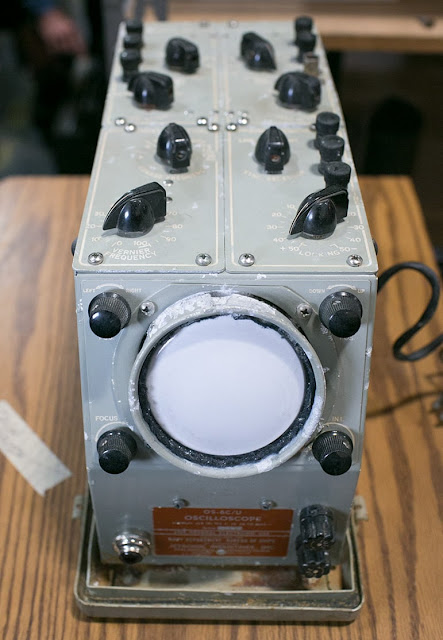
A vintage oscilloscope discovered at a huge white elephant sale. The controls remind me of a 1950's scifi spaceship. A few years ago, there was a shift in digital design away from 3D real-world textures to a more flat look. I think this simple aesthetic works for most user interfaces, as it doesn't distract from the content. But for HAUNTIBLES, I wanted to embrace what's known as Skeuomorphism.  Skeuomorphism skjuːə(ʊ)ˈmɔːfɪz(ə)m  A design concept that attempts to imitate the look of real-world objects (like this instagram logo.) Instead of a clean flat design, I aimed for a more gritty, cracked, faded and worn-out look. This aesthetic meshed a lot better with the old photographs that are at the heart of HAUNTIBLES. So, much like a sound designer who ventures into the field to collect sound effects, I needed to hunt for textures.  You never know what you'll see at an antique fair. This box of prosthetic peepers "caught my eye". ...

Lightbox

Image
Closeup of my old BOLEX camera showing the framerate dial and part of the handcrank.  My film class was one of the last to shoot, edit, and project our movies using actual film stock. Nowadays they shoot everything digital (and in many ways it's much better.) Florida mosquitoes would attack me whenever my hands were stuck inside a change bag; sometimes the lab would screw up the negatives; and we'd never knew for sure if we'd exposed our scenes properly until days later. Filming a shipwreck movie on the Gulf Coast back in college. But there was still something magical about holding a reel in your hands, a frozen waterfall of time condensed into miniature rectangles. Although threading celluloid through Steenbeck edit tables was tricky, it also felt like we were practicing a trade, an ancient craft passed down to us from the legends of movie-making (or maybe I'm just feeling nostalgic.) I wanted to capture some of that old-fashioned mojo in HAUNTIB...

Hauntibles

Image
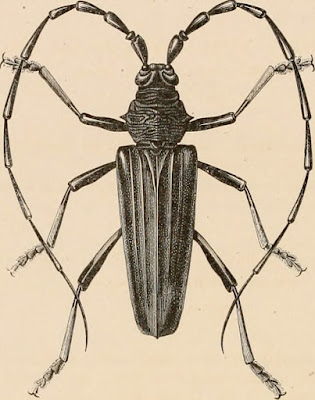
Antiquing with a spooky twist. Beware the haunted lobstah! So many of my favorite ghost stories, such as "The Monkey's Paw" by W.W. Jacob, start with someone obtaining a haunted antique. There's just something about these old relics that sparks the imagination.  HAUNTIBLES is chock full of these haunted collectibles or "hauntibles" as I'm calling them. They're mostly sourced from archival research I've done, and the game is designed in such a way that I can easily update it with new hauntibles as I discover them. Hauntibles have already been covered briefly under the Cabinet of Curiosities post, but I wanted to delve into a bit more detail 'cause I love them so much.  A batch of procedurally generated beetles! Here's where it gets a little technical. In order to use these objects in the game, I cycle them through a bit of code (which I'm calling the "pattern buffer" because I'm a Star Trek ner...

Ghost Design

Image
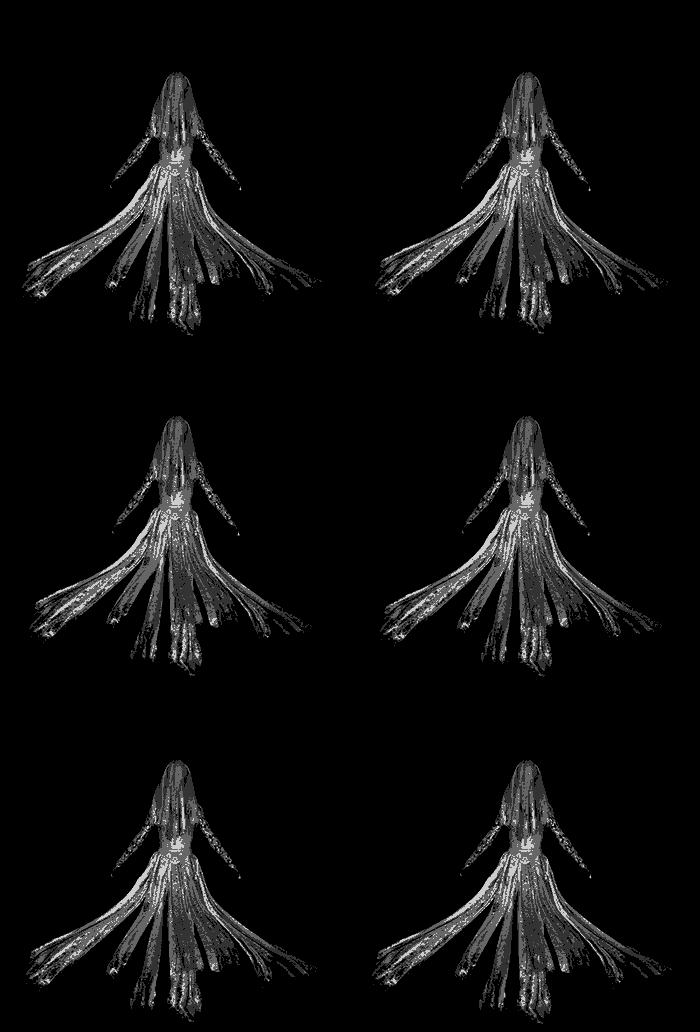
Early animation test of one the specters in HAUNTIBLES. Ghost have been depicted countless ways in movies, TV, and games. They run the gambit from fully formed Ghostbusters ghouls to the more ethereal forms of Paranormal Activity. HAUNTIBLES contains a number of spirits, some helpful - others malevolent. The question is, what form should they take? While I'm still ironing out the look, I'm drawn to the use of flowing cloth. The floating garments really sell the idea that these beings exist in another realm, with different rules governing the physics. I also like Victorian-era outfits, especially the creepy "mourning gowns" customarily worn at the time. 1861 photo showing the five daughters of Prince Albert mourning his death. After his passing, Queen Victoria wore mourning clothing for the rest of her life. Ghosts are such a staple of our storytelling, and have been featured so many times, that it's difficult to come up with an original look an...

Psychic Howlers & Other Ghost Detectors

Image
"I have been at work for some time building an apparatus to see if it is possible for personalities which have left this earth to communicate with us." - Thomas Edison You read that right. Thomas Edison, the famous American inventor, might have built a ghost detector. There's no evidence he actually constructed a working prototype, but he did go on the record to say that he was thinking about it. "This apparatus is in the nature of a valve, so to speak. That is to say, the slightest conceivable effort is made to exert many times its initial power for indicative purposes."  Although Edison may never have gotten past the development stage, there are others who claimed to have created working ghost detectors. In fact, whole laboratories were set up to study  communication with the supernatural. A New York Tribune article about the "American Psychical Institute", which pioneered several ghost hunting apparatus.  There is a ghost detect...

Bugs

Image
Aghhhhhhh!  I do have a few creepy crawlies in HAUNTIBLES, but those aren't the bugs I'm talking about here. I'm talking about the bugs that cause the game to freak out and sometimes crash. Throughout development, I've gotten pretty good at squashing them as they appear. But every now and then I stumble upon a tricky one - a super hardy radioactive-immune cockroach with a stubborn will to survive. For the past few weeks, I've been battling a particularly nasty game bug. It appears randomly, so it's difficult to pinpoint the cause. And to be honest, it's driving me a little crazy. I'd much rather be working on story, graphics, anything really, but a stable game is vital, so I can't ignore it. Thought I should add this blog post to show that development is a bumpy road. (Though as camping has taught me -  bumpy roads often lead to cool places.) Update: Squashed.......finally! One itty bitty little line of code causing all that mayhem....

Story Scraps

Image
I've always wanted to include a story in HAUNTIBLES. But I also wanted to weave this narrative into the gameplay and do it in a novel way. The solution I chose turned out not to be a new way at all - but a very old one. Scrapbooking. For centuries, people have told their stories through scrapbooks. Even the famous author Samuel Clemens, or Mark Twain as he was commonly known, was an active scrapbooker. He loved to fill volume after volume with newspaper articles, ticket stubs, and other miscellany from his travels. To simplify the process, he even patented a self-adhesive scrapbook that he sold under his name. Mark Twain's scrapbook patent earned him a small fortune, as much as $100,000 according to some estimates. Scrapbooks are goldmines for researchers as they're curated collections of history that tell personal stories. This storytelling power is one of the reasons there's a scrapbook at the heart of HAUNTIBLES. It also works extremely wel...